
White Hot Aces Video Poker: What the “White Hot” Mechanic Means and How It Affects Bankroll Discipline
White Hot Aces is not simply another multi-hand video poker title. It is a structural variation built around an escalating multiplier mechanic that activates after specific winning combinations. For players who treat video poker as a discipline rather than a casual pastime, understanding how the “White Hot” feature reshapes variance, expected value distribution and betting behaviour is essential. This article explains how the mechanic works in practice and, more importantly, how it influences bankroll management decisions in 2026’s online and land-based environments.
How the “White Hot” Mechanic Actually Works in White Hot Aces
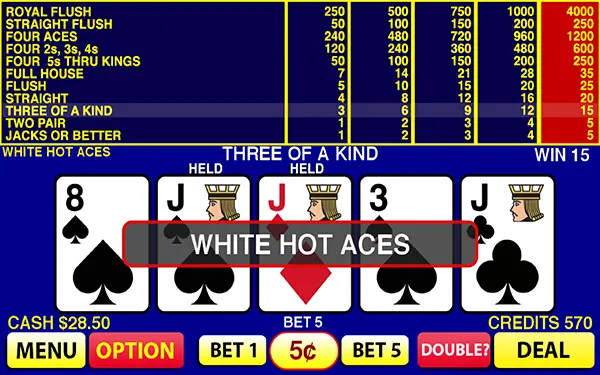
White Hot Aces is based on a Jacks or Better-style paytable, but its defining feature is the progressive multiplier that increases when certain qualifying hands are hit. Typically, three-of-a-kind aces or better trigger a multiplier increase on subsequent hands. The multiplier then applies to the next winning result, after which it resets to its base level. This creates short bursts of amplified payouts rather than a constant elevated return rate.
In most modern versions available in 2026, the multiplier ladder climbs step by step — for example, x2, x3, x5 and potentially higher depending on configuration. The exact trigger threshold and cap vary by casino software provider, but the logic remains consistent: frequent medium-strength hands fuel the multiplier, while a later strong win captures its enhanced value.
Crucially, the mechanic does not alter the base paytable percentages directly. Instead, it redistributes return across volatility cycles. Over the long term, theoretical RTP remains within the typical 96–99% range for optimal play, depending on paytable quality. However, the path to that RTP becomes more uneven.
Why the Multiplier Changes the Game’s Variance Profile
Standard Jacks or Better has relatively stable variance compared with bonus-heavy formats. White Hot Aces increases short-term volatility because value is temporarily stored in the multiplier rather than paid immediately. A player might experience modest returns while building the multiplier, followed by a single amplified payout.
This design creates clustering. Instead of evenly distributed returns, outcomes become streak-based. A disciplined player recognises that the absence of immediate reward during multiplier accumulation does not indicate negative expectation — it reflects deferred value.
From a statistical perspective, variance rises while long-term expectation remains broadly comparable to other video poker variants with similar paytables. That distinction is central to responsible bankroll planning.
Impact on Bankroll Strategy and Session Planning
The presence of a multiplier system directly affects bet sizing logic. Because value can accumulate across hands, leaving the game immediately after increasing the multiplier may forfeit a statistically advantageous position. Conversely, chasing the next hit without sufficient funds exposes the player to elevated risk.
A structured bankroll approach for White Hot Aces should include a predefined session allocation that accounts for higher volatility. Where a standard Jacks or Better session might require 200–300 betting units for comfort, White Hot Aces sessions often warrant 300–400 units to absorb multiplier build phases safely.
It is also advisable to avoid variable betting strategies unless the paytable specifically rewards maximum coin play. As with most video poker formats, optimal returns typically require betting the full five coins to access the highest royal flush payout tier.
When to Walk Away and When to Continue
One of the most misunderstood aspects of multiplier poker variants is emotional attachment to an elevated multiplier. The game’s mathematics does not guarantee a win once the multiplier reaches a higher tier. It merely increases the potential payout of the next winning hand.
Professionally disciplined players set stop-loss and stop-win thresholds before starting. For example, a 30% drawdown limit or a 50% profit target relative to session bankroll helps neutralise impulsive decision-making. These boundaries remain valid regardless of multiplier level.
In practical terms, staying solely because the multiplier is high can distort rational bankroll management. Decisions should be based on overall session structure, not psychological momentum.
Strategic Adjustments in Hand Selection and Risk Tolerance
White Hot Aces does not drastically change optimal video poker strategy charts for base play. However, awareness of multiplier value can subtly influence marginal decisions. Advanced players sometimes adjust aggression slightly when a high multiplier is active, favouring plays that preserve potential high-paying combinations.
That said, any deviation from mathematically optimal strategy must be carefully calculated. Blindly chasing four-card royal draws or discarding medium pairs simply because a multiplier is active can erode long-term return.
In 2026, strategy calculators and simulation tools remain widely available, and serious players use them to test multiplier scenarios before applying adjustments in live sessions.
Psychological Discipline and Emotional Control
Multiplier mechanics are designed to create anticipation. The visible escalation reinforces engagement and can encourage extended sessions. Recognising this behavioural effect is part of maintaining professional discipline.
Players who treat White Hot Aces as an analytical exercise rather than a reactive experience tend to manage volatility more effectively. Keeping detailed session logs — including multiplier peaks and associated results — allows objective evaluation over time.
Ultimately, “White Hot” mechanics reward structured thinking. When bankroll allocation, session limits and optimal strategy are respected, the format can be integrated into a broader video poker portfolio without destabilising financial control.