
Dream Card Poker: How the Dream Card Changes the Optimal Video Poker Strategy in 2026
Video poker continues to attract players who appreciate a combination of mathematical decision-making and straightforward gameplay. Unlike traditional slot machines, every choice made during a hand can influence the expected return over thousands of rounds. In 2026, one of the mechanics receiving increased attention is Dream Card Poker, a variation that introduces a designated “Dream Card” capable of improving the value of completed hands. Although the game still relies on the familiar draw-and-hold format, the additional feature changes how experienced players evaluate starting hands, calculate expected value and determine which cards should be retained before the draw.
Understanding the Dream Card Feature and Its Influence on Gameplay
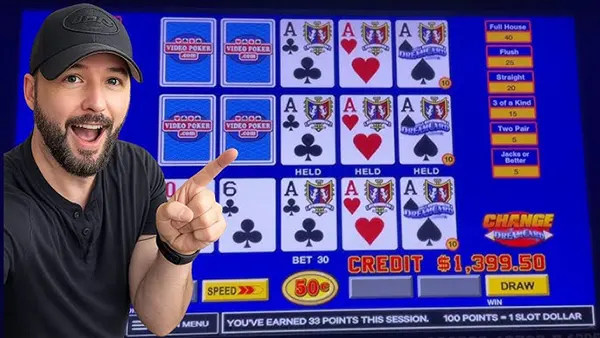
Dream Card Poker follows the standard principles of five-card draw video poker but introduces an additional mechanic that can transform one randomly selected card into a more favourable value after the initial deal. Instead of relying solely on the natural distribution of cards, players receive an opportunity for certain combinations to become stronger during the draw. This additional element affects probability calculations without replacing the fundamental mathematics that make video poker distinct from pure chance-based casino games.
The importance of the Dream Card becomes particularly noticeable when analysing hands that would normally be considered marginal. Conventional video poker strategy often recommends discarding weak kickers or isolated high cards in favour of pursuing mathematically superior combinations. With the Dream Card mechanic, however, several borderline situations produce different expected values because the upgraded card increases the likelihood of completing premium hands such as straights, flushes or full houses.
The feature does not eliminate the need for disciplined strategy. Players who continue making decisions solely on intuition are unlikely to gain any long-term advantage. Instead, successful play requires understanding how frequently the Dream Card appears, which hands benefit the most from its presence and how the modified pay table influences theoretical return.
Why Standard Video Poker Charts Are No Longer Sufficient
Traditional strategy charts for games such as Jacks or Better, Bonus Poker and Double Double Bonus were developed through millions of computer simulations based on fixed probabilities. Dream Card Poker introduces an additional variable that alters those probabilities. As a result, conventional holding charts cannot always produce the mathematically optimal decision.
Professional players increasingly rely on updated simulation software capable of modelling the Dream Card separately from the standard deck. These calculations evaluate every possible starting hand while considering both the probability of receiving the special card and its effect on future draws. This process generates revised expected values that differ from classical strategy charts in numerous situations.
For casual players, the practical implication is simple. Memorising traditional video poker strategy remains useful because many decisions remain unchanged. However, anyone aiming to maximise long-term return should use strategy resources created specifically for Dream Card Poker rather than assuming that conventional recommendations remain universally correct.
Strategic Adjustments That Matter Most in 2026
The most significant adjustment involves re-evaluating drawing hands that have multiple improvement paths. Four-card straight draws, inside straights, partial flushes and low pairs may all gain additional value depending on how the Dream Card interacts with incomplete combinations. These situations require careful comparison of expected return rather than following fixed rules.
Another important consideration is bankroll management. Although the Dream Card increases the frequency of certain premium hands, it may also create greater short-term volatility depending on the game’s pay structure. Larger winning combinations occur more often, yet losing sessions remain possible because the mechanic does not guarantee favourable outcomes during every playing session.
Experienced players in 2026 increasingly combine mathematical analysis with session management. Rather than focusing exclusively on individual hands, they monitor theoretical return, betting consistency and long-term variance. This analytical approach allows realistic expectations instead of assuming that the Dream Card fundamentally changes the house advantage.
Common Strategic Mistakes Players Continue to Make
One of the most frequent errors is overestimating the influence of the Dream Card. Some players begin retaining weak cards simply because they hope the special mechanic will complete an unlikely winning hand. In most situations, probability calculations still favour decisions based on expected value rather than optimism.
Another common mistake involves ignoring the game’s specific pay table. Two Dream Card Poker machines may use identical mechanics while offering different payouts for flushes, full houses or four-of-a-kind combinations. Since theoretical return depends on both probability and payout, strategy should always be adjusted according to the exact pay schedule displayed before play begins.
Players also underestimate the importance of disciplined bet sizing. The presence of an additional feature does not justify increasing wagers beyond an affordable bankroll. Sound bankroll management remains one of the strongest contributors to consistent decision-making, especially during periods of normal statistical variance.
Analytical Play and Future Strategy Development
Advances in probability modelling have made video poker analysis considerably more sophisticated by 2026. Simulation software can now evaluate billions of potential hand combinations within seconds, allowing developers and independent analysts to calculate accurate strategy recommendations for games incorporating additional mechanics such as the Dream Card.
Artificial intelligence has also become a valuable educational tool rather than a replacement for player judgement. Modern training applications compare each decision with mathematically optimal play, identify repeated strategic mistakes and estimate the expected value lost through inaccurate card selection. These tools allow players to improve without relying on guesswork.
Despite technological improvements, the core principles of successful video poker remain unchanged. Understanding probability, maintaining discipline, following mathematically justified decisions and selecting games with competitive theoretical return continue to determine long-term performance far more than any single game feature.
Can the Dream Card Improve Long-Term Results?
The Dream Card mechanic has the potential to increase the theoretical return of certain game versions when combined with favourable pay tables. However, this improvement depends entirely on the mathematical design implemented by the software developer rather than the existence of the feature alone. Players should therefore evaluate complete game rules instead of focusing exclusively on marketing descriptions.
Independent game analysis remains one of the most reliable methods for assessing value. Reviewing published return-to-player percentages, examining verified pay tables and understanding the frequency of premium combinations provide a much clearer picture than isolated winning examples shared online. Short-term results rarely reflect the game’s actual statistical performance.
Dream Card Poker demonstrates how modern video poker continues evolving while preserving the strategic foundation that distinguishes it from many other casino games. Players who approach the game analytically, adapt to updated probability models and base every decision on verified mathematical information are best positioned to make informed choices throughout 2026.